

 Contact
 ことのは
ことのは 日本人らしい気遣いの表現
みなさん、こんにちは。ようやく重い腰が上がりました。
さて、今日も言葉が持つ意味についてアップしていきたいと思います。
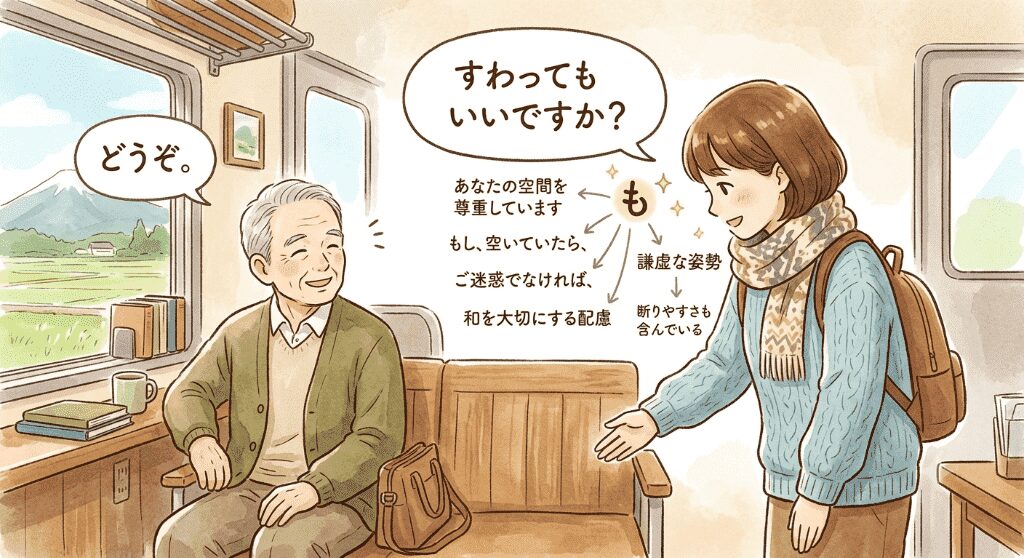
日本語の日常の何気ない一言には、日本人の気遣いや文化が隠されていると時々アップしていますが、今日は、「すわってもいいですか」の「も」について考えていきたいと思います。
みなさんは、電車で空いている席に座るときや、カフェで相席をお願いするとき、どちらの言葉を掛けますか?
- 「すわっていいですか?」
- 「すわってもいいですか?」
ほとんど同じ意味に思えるこの二つの言葉ですが、実は「も」という、たった一文字が入るだけで、相手に与える印象と言葉の奥にある「配慮」の深さが変わるんです。
◆ 「すわっていいですか?」が持つニュアンス
「すわっていいですか?」は、とてもストレートな許可の求め方です。ダイレクトなので、相手は拒否しにくい状況になってしまうかもしれません。
一方で、「すわってもいいですか?」はどうでしょうか。 この「も」が入ることで、言葉のニュアンスは変わります。
実は、この言葉の裏には相手に対する配慮や気遣いが隠されているのです。
日本人は、要望を柔らかくして伝えます。相手の気持ちを考え、相手に嫌な気持ちを感じさせないように、配慮しながら、自分の意向を伝えます。
自分の「座りたい」という気持ちだけを出すのではなく、相手の状況や気持ちも考えるのです。
このように配慮して伝えられると、快く「はいどうぞ」と言いたくなりませんか。相手の気持ちも優しくさせる。これが、日本人が無意識のうちに使い分けている「も」であり、日本人らしい気遣いの表現なのです。
一言で「も」を言うなら、「も」は日本人の気持ちを含んでいる。「もしよければ」「ご迷惑でなければ」という気持ちが含まれているということ。この一文字に、配慮や気遣いが含まれているのです。「も」は自分の行動の許可をおねがいするということがポイントになると思います。
ぜひ、あなたが誰かの隣の席に座るとき、この「も」を意識して使ってみてください。たった一文字であなたの優しいきもちを届けられますよ。
A Reflection of Japanese Thoughtfulness and Consideration
Hello, everyone! Well, I’ve finally gotten around to writing again.
Today, I’d like to share another thought on the hidden meanings behind the words we use. As I often mention on this blog, casual, everyday Japanese phrases frequently hold deep cultural nuances and thoughtfulness. Today, let’s focus on the tiny word “mo” (も) in the phrase “Suwatte mo ii desu ka?” (May I sit here?).
Imagine you are looking for a seat on a crowded train or asking to share a table at a cafe. Which of these two phrases would you use?
- “Suwatte ii desu ka?” (すわっていいですか?)
- “Suwatte mo ii desu ka?” (すわってもいいですか?)
While these two sentences may seem to mean virtually the same thing, adding just that single character—the particle “mo”—completely changes the impression it gives and deepens the level of consideration behind the words.
◆ The Nuance of “Suwatte ii desu ka?”
“Suwatte ii desu ka?” is a very direct way of asking for permission. Because it is so straightforward, it can sometimes put the other person on the spot, making it socially difficult for them to say no.
On the other hand, how does “Suwatte mo ii desu ka?” feel? By adding “mo,” the nuance of the sentence shifts beautifully.
Behind this simple “mo” lies a deep consideration for the other person. In Japan, people prefer to soften their requests. Rather than bluntly stating what they want, they convey their intentions while minding the other person’s feelings and making sure not to cause any discomfort.
Instead of just pushing the selfish desire of “I want to sit down,” the speaker genuinely considers the other person’s current situation and feelings. When a request is made with this kind of care, doesn’t it make you want to smile and say, “Yes, please go ahead”?
It warms the listener’s heart. This is the power of “mo”—a gentle expression of Japanese mindfulness that native speakers use almost unconsciously.
If I had to sum up “mo” in one sentence, it is that “mo” carries the speaker’s heart. It silently holds unspoken phrases like “If it’s alright with you” or “If it’s not too much trouble.”
This single character acts as a cushion of politeness and empathy. Ultimately, the key point of “mo” is that it turns a simple request into a humble prayer for permission, showing utmost respect for the other person’s space.
The next time you go to take a seat next to someone, I hope you’ll remember the gentle magic of this tiny word, “mo.”