

 Contact
 ことのは
ことのは 日本語はどっちも「と」
Lessonをしていると、助詞の質問はよくあります。 「助詞はむずかしい」という声もよく聞きます。 初級では、「へ」「に」「で」の違いがいちばん多いかもしれません。
そして、もうひとつよく出るのが「と」です。
りんごとバナナとみかんがあります。 友だちと遊びに行きました。
どちらも「と」を使いますが、意味はちがいます。 英語だと “and” と “with” に分かれますね。
英語がわかる学習者さんは、こう言うと理解が早いです。 でも、日本語の構造をしっかり知りたい学習者さんは、 「どうして同じ『と』なの?」と気になります。
「と」の意味や使い方がわかったとき、 みなさん本当にうれしそうな表情になります。
シンプルに伝える。イメージできる。 そうすると、学習者さんは自分から例文を言い始めます。
嫌なものは続かない。おもしろいものは続く。 わかれば楽しいし、興味がわきます。
同じ「と」でも、英語だとちがう。 日本語だといろんな使い方があって、「どやねん!(関西弁)」ってなりますよね。
興味を持って楽しく日本語が勉強できるよう、私もまだまだ成長していかなければと思います。
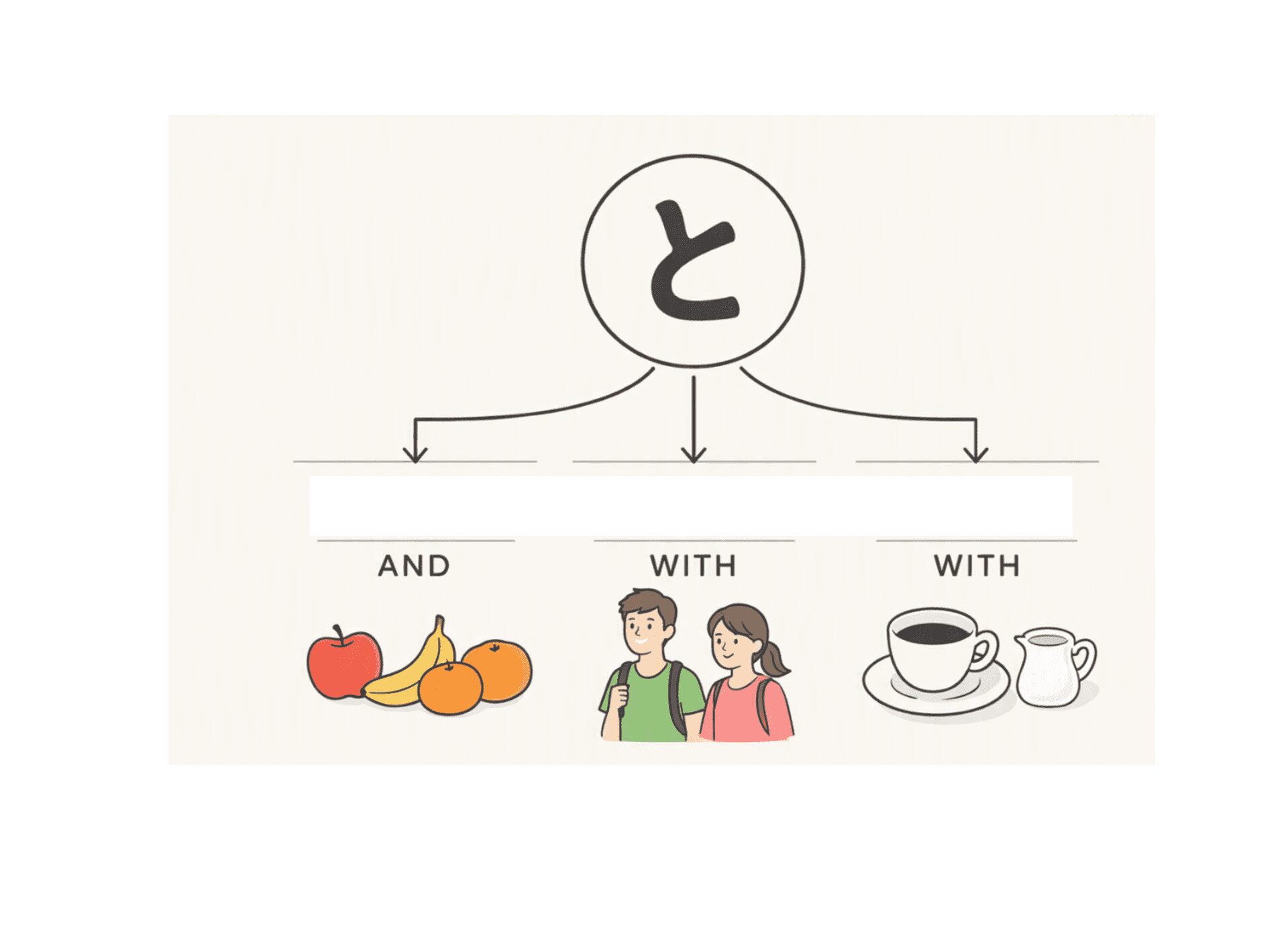
In Japanese, both are “to”
When I teach lessons, learners often ask questions about particles. Many people say, “Particles are difficult.” In beginner classes, the most common questions are about e, ni, and de.
Another particle that learners often ask about is to.
For example:
- りんごとバナナとみかんがあります。
- 友だちと遊びに行きました。
Both use to, but the meanings are different.
In English, these become and and with.
Learners who understand English can learn this quickly. But learners who want to understand the structure of Japanese often wonder:
“Why does Japanese use the same to?”
When learners finally understand the meaning and structure of to, their faces become bright and happy.
If the explanation is simple and easy to imagine, learners start making their own example sentences.
If something feels difficult, we don’t want to continue. If something feels interesting, we want to learn more. Understanding brings joy and curiosity.
Even though Japanese uses the same to, English separates it into different words. It makes you think, “どやねん!(kansai dialect )”
.I feel I still have a lot to learn so that I can help students study Japanese with interest and enjoyment.