

 Contact
 ことのは
ことのは Contents
日本人は「謝りすぎ」に見える?
( Why do Japanese people apologize so much?)
みなさんが、日本に来ると、こんな場面で「すみません」を聞くかもしれませんね。たとえば、
- エレベーターでドアを開けてもらったとき
- レストランで店員さんを呼ぶとき
- プレゼントをもらったとき
実は、これらは「I’m sorry」ではなく、「私のために時間や手間を使ってくれて恐縮です」という謙虚な気持ちを表しているんですよ。つまり、謝っているのではなく、「相手への敬意と配慮」を表しているんです。
When you visit Japan, you’ll probably hear the word “Suminasen” in many different situations. For example:
- When someone holds the elevator door for you.
- When calling a waiter at a restaurant.
- When receiving a gift.
Actually, in these moments, we aren’t exactly saying “I’m sorry.” Instead, we are expressing a humble feeling: “I feel hesitant and grateful that you spent your time and effort for me.”
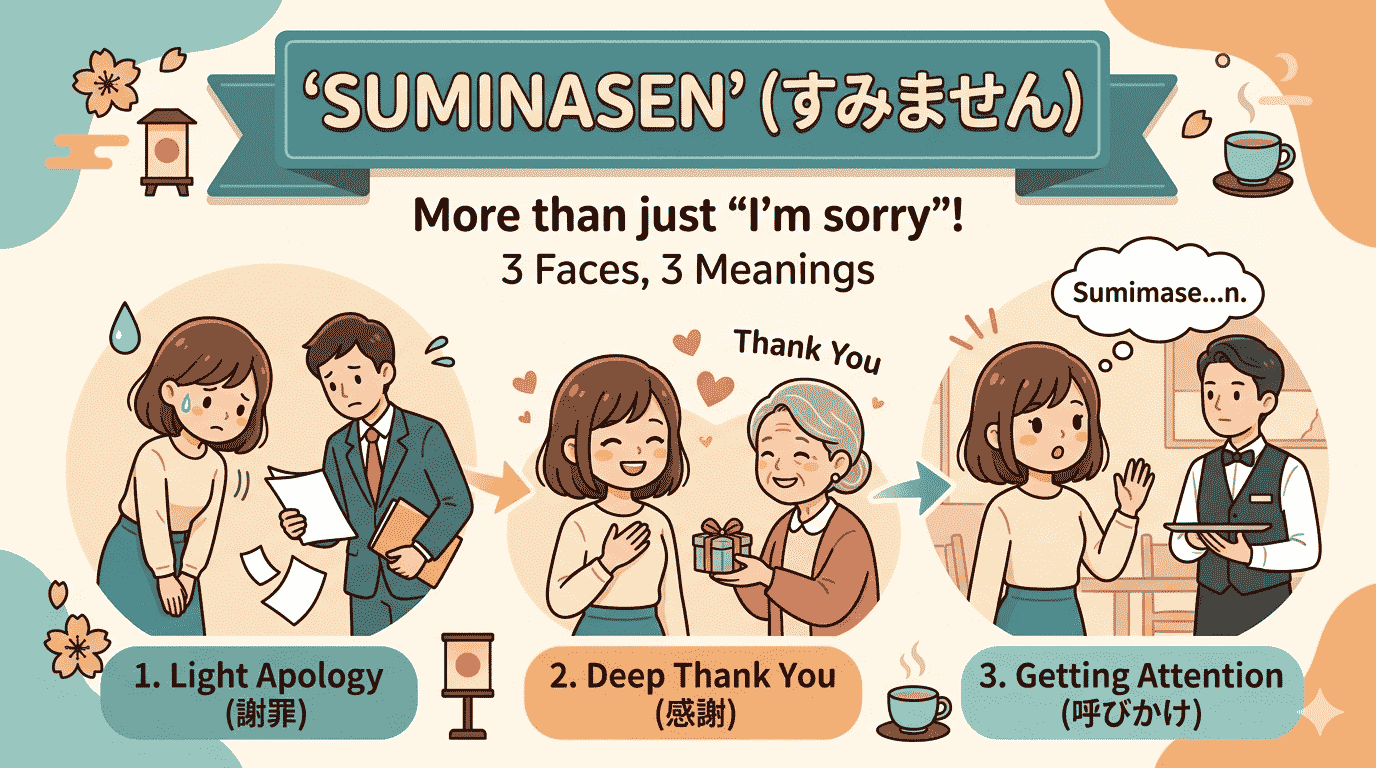
「すみません」の3つの顔 (3 Meanings of Sumimasen)
1.Excuse me = これは、呼びかけをするときに使います。そして、相手のテリトリーに踏み込む際のクッション言葉になります。
例えば、道に迷って、だれか見知らぬ人に声をかける時や、レストランで、店員さんにお願いをしたいとき、「すみません」と言います。
- Thank you = これは、感謝を表すときに使います。恐縮の気持ちも含んでいると思います。
「ありがとう」と言うのが少し照れくさい時や、相手に負担をかけさせた時、私たちは、「すみません」と言うときがあります。
日本では「何かをしてもらう=申し訳ない」という感覚があります。日本の文化が反映されているんですね。
- I’m sorry =これは 謝罪するときに使います。
物を落としてしまったり、書類を少し書き間違えて、注意を受けたときなど、「すみません」と言います。ただし、状況によっては(内容の程度や相手)「もうしわけありません。申し訳ございません。」という表現を使って謝罪します。
1.Excuse me (Getting Attention)
This is used to call out to someone. It acts as a “buffer” (cushion word) when entering someone else’s personal space.
Example: When you are lost and need to ask a stranger for directions, or when you want to make a request to a waiter at a restaurant, you say “Suminasen.
2.Thank you (Expressing Gratitude)
This is used to show appreciation, often mixed with a feeling of being humbled. We sometimes say “Suminasen” when we feel slightly shy about saying a direct “Arigato,” or when we feel we’ve put a burden on the other person.
3.I’m sorry (Apologizing)
This is used for making an apology.
Example: When you drop something, or when you make a minor mistake on a document and receive a correction. However, depending on the severity of the situation or who you are talking to, we use more formal expressions like “Moushiwake-arimasen” or “Moushiwake-gozaimasu.”
魔法のコンボ:すみません&ありがとうThe Magic Combo: Suminasen & Arigato
日本人はよく「すみません、ありがとうございます!」とセットで言います。
これは、「あなたの親切に対して申し訳ない(すみません)」+「でも、とても嬉しい(ありがとう)」という、二つの感情を同時に伝える日本特有の表現かもしれませんね。
こうした日本人の気持ちを理解して、表現できたら、あなたも、もう日本人の心を持っていますよ。
Japanese people often say ‘Suminasen, Arigato!’ together as a set.”
This is a unique Japanese expression that conveys two emotions at once: ‘I feel sorry for the trouble I caused you (Suminasen)’ + ‘But I am so happy for your kindness (Arigato).
Once you understand and can express these feelings, you already possess the heart of a Japanese person.
まとめ(Conclusion)
「すみません」は、日本人の「思いやり」の心の表れです。それは、あなたが周りの人々の存在を意識し、自分自身よりも「和(調和)」を大切にしているという証(あかし)なのです。
「みなさんは、どんな時に『すみません』を使いますか?
“Suminasen” is a reflection of “Omoiyari” (consideration for others). It shows that you are aware of the people around you and value harmony over yourself.
“When do you usually say ‘sumimasen’?”
次回の記事では、「よろしくお願いします」の本当の意味を掘り下げます。お楽しみに!
In my next post, I’ll be exploring the true meaning of “Yoroshiku Onegaishimasu.” Stay tuned!